Are Good Neighbors the turning point in chronic illness? (1 of 2)
This is a two-part essay and story about having a chronic illness and all the things that have helped me with my long Covid symptoms across the past four months in 2026. Many suggestions have helped me a little bit, but nothing helped me a lot. Until this week. Part 2 is a strange true story about the intense, surprising, magical moment that seems to be an important turning point in my struggle with long Covid. Time will tell.
Between the words here, and in the final story in part 2, there are also Good Neighbors to be found. Depending on where you are, Good Neighbors are also known as fairies, or clues, and these days, some even call them glimmers. To have a chance at seeing them, you've got to feel them. And if you want to feel them, you must be fully present and full of respect or wonder. It helps to be an awe-filled kid, a wise elder, an adult ready to admit that they're struggling, a tree or forest, a flower, a cat, an octopus, a field, or a pollinator of some sort. Busy adult humans, it seems, often have to be sunk or lost or ill to be in the fully respectful, fully present state of being, inclined to listen well and watch far more carefully, to see them.
So. Feel/watch for the Good Neighbors between the words, between ideas, and between me and my experience—and you and yours—here. Here, the Good Neighbors, fairies, clues, glimmers—whatever you call them—live in the in-between. They live in cracks within and among the known, in curiosity, in relationship, in uncertainty, in mischief, and in wonder. Practice feeling for them here in Part 1, and I can almost guarantee that you'll feel a lot more of them in Part 2. Of course I can't fully guarantee it. I'm not the boss of them. No human is or can be.
If you have long Covid like me—or any chronic difficulty or chronic illness, I'm no gatekeeper—and nothing is working well for you right now, then this whole thing—both Parts 1 and 2—is maybe, probably, definitely for you. Together they're maybe about what we're letting go of so we can reclaim who we are and better understand what's ours to celebrate, to learn/unlearn, to help with, and what's ours to let go of in this moment. Honestly, I can't quite tell yet. I'm watching for the Good Neighbors here this month. With mouth dropped so wide open in awe that I can barely speak in person right now....
Lori gets long Covid
I had a terrible bout of Covid back in late March/early April. I got it either at an airport or on the airplane on the way back from visiting family. It had been four years since I had it the last time, and somewhere along the way I'd gotten cocky. So, I travelled with no mask. And it had been two or three years since I had my last Covid vaccine. My 85-year-old Dad who was with me the whole time, who gets the vaccine every year, did NOT get it, BTW. I travelled with a foolish self-assurance that came with working from home and living rurally (where social distancing is a breeze most days), paired with the belief that having had it before somehow made me less susceptible, plus a deep faith in my own health and the plants and herbal remedies made by me leaning on the land here that help keep me generally remarkably healthy. The land/plants here had helped me rapidly overcome Covid the first time I got it all those years ago. Pride comes before the fall, yes. And sadly, this appears to hold true no matter who you vote for.
On the front lines of fighting a new variant of Covid. This time getting Covid was very different. It felt like I was fighting a powerful and unknown monster— and I was losing. In the initial weeks I could feel it doing serious damage to my throat, then lungs, and then sinuses. Our doctor's office—always stretched paper thin since 2020—wasn't up to the task of helping in any real way that brought relief. After a couple of weeks, I could feel Covid oozing into the spaces of grief and rage across my being— opened by the recent loss of my Mom to Alzheimer's disease, the global billionaire and Christo-fascist takeover of the U.S. government and all attendant pointless violence and death, and the ongoing genocide of our dear friends in and near Gaza. People I love are being threatened, tortured, hurt, hunted, experimented on, and/or killed– needlessly– every God damn day. Rage helps us focus on what matters most. Grief creates space within. Both can feel horrible but are also good if you're also held by community, family, and the land you're on. That open space within me is where I stepped up to face this new, more devastating, Covid. Don't ask me to explain that. I just know it to be true. And, I don't need you to believe what I believe. This isn't a sales pitch.
Symptoms of long Covid. After four weeks of being remarkably ill, I thought I'd finally turned the corner back toward wellness. The initial symptoms finally subsided in late April. Within days, though, one by one, an army of new and apparently unshakable symptoms took their place: dizziness upon rising, then strange headaches, then a low-grade and persistent coughing, and then congestion that was so sticky it seemed I'd sucked a gummy creature from hell into my sinuses. Then digestive troubles. Then sleep disturbances– waking up more often at night and not being able to get back to sleep like I used to. And then random daytime dizziness that felt directly related to my still-troubled sinuses, but it was, and still is, entirely unpredictable. My body began to ache all over and eventually settled on localized aches in my head, jaw, neck, and shoulders. And then, the worst symptom, by far, for me: a debilitating chronic fatigue that's not helped by sleep and that's made worse by physical activity. Walking to the bathroom and back can make me need a nap and walking to and from the kitchen can make me dizzy.
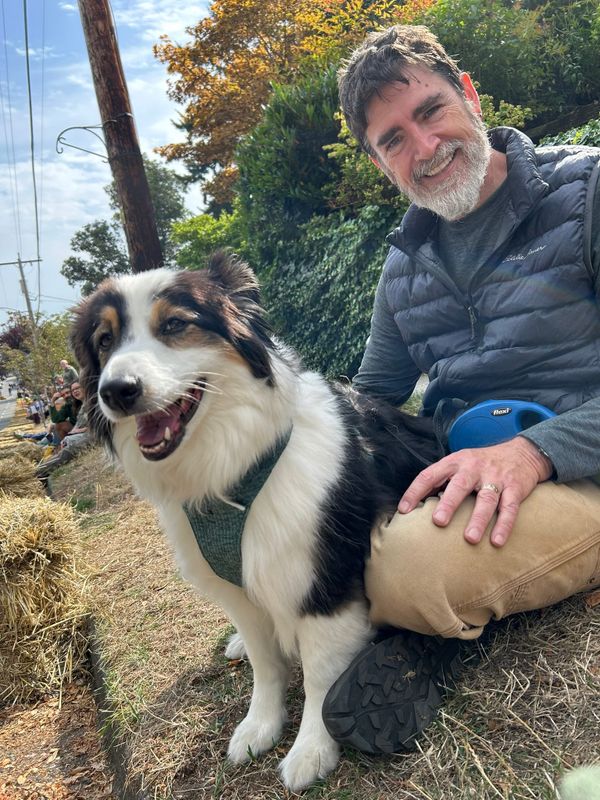
Turns out, I didn't know what fatigue even was before this. Back in February I could walk my dog for hours when I had the time. By late May, I could walk her for 10 minutes before becoming so fatigued and/or dizzy that I had to sit down. For at least an hour. I went from being a healthy, active 56-year-old to an unhealthy 96-year-old almost overnight. The only primary long Covid symptom I didn't get was losing my sense of taste and smell. Woo frickin' hoo. Yay me.
This thing called long Covid. With this new pile of symptoms arriving on the heels of a really bad case of Covid, all research led me to the same place. My doctor, when presented with my list of symptoms, and then some test results, agreed. Long Covid. Or, long-haul Covid, chronic COVID, post-COVID conditions (PCC), post-Covid syndrome, and/or post-acute sequelae of SARS CoV-2 infection (PASC). We don't even know exactly what to call this thing yet. As a poet, early on I thought Covid Clusterfuck-a-Doodle-Do had a nice ring to it. Whatever you call it. It's that. I have that. Researchers around the globe will be studying it for a long while and good for them. Nurses and doctors and naturopathic doctors and herbalists and homeopathic doctors and massage therapists and body workers and acupuncturists and therapists and mental health workers and all sorts of other healers will be figuring out how to help face and treat and accept and live with this that for a long time. And good for them. From one perspective, we're at the very beginning of understanding this. We need all the help we can get. We, here, being humanity.
Long Covid is debilitating. Before we go any further together—because beings like me are regularly accused of being too light-hearted and optimistic– know this. It sucks. Long Covid totally sucks. Chronic illness sucks. I don't use the word debilitating lightly. If I didn't a) have the competent, helpful partner I have, and b) if he himself wasn't really healthy this year (not always the case), and c) if I wasn't able to take a massive chunk of time away from work to rest and learn and heal because I sold my business last year and we have that chunk of money this year to help us live—that's three remarkably lucky coincidences(?) going for me—as people who work for ourselves in the U.S., I/we would be completely screwed right now.
As a usually healthy human/writer/herbalist, I didn't know all the things to consider when I spoke in the past. Plants are healing! The land is healing! Creativity is healing! Cultivating your relationship with the land and trees and plants and sky and stars and human neighbors is healing! Yes. Oh yes. No doubt. Yes, and. What do you do when you don't have the ability/energetic capacity to walk the land? To go into the woods anymore? To go to neighbor's homes? To grow or harvest or forage or process and prepare the healing plants for consumption? What do you do when you don't have the energy to write or create or imagine the new? What do you do when you don't have the energy to shop or cook or feed yourself, let alone the energy to heal yourself? Yet another unwelcome symptom shows up: depression. That's many chronic illnesses and some disabilities, too. And that's also intentionally systemic problems created by the crumbling old systems we live in now, too. Yes. And. That's long Covid. The people's chronic illness! (Sorry. I've been watching online classes at The People's Forum this spring/summer. I'm calling everything "the people's" these days.) ;-)
Things I've tried that have helped a bit
After the first month battling Covid, I've now had long Covid for three additional months. That's a lot of time to experiment, when you don't have the energy to do much else. I've read everything that the Covid clinics and good journalists are willing to share online, and I've tried everything my own doctors, trusted herbalists, and trusted community members who have/had long Covid have thrown my way. Tons of things didn't help at all. Here are the things that helped me a little bit.
Getting the initial diagnosis and recognizing your people
When you're drowning and scared below a waterfall of apparently chronic symptoms appearing out of nowhere, simply having a name to give to what was happening is a relief. A clue. A lighthouse. A direction. A glimmer of hope. In a dense fog, I figured out the first step. Yay! My doctor agreed. Whew.
Every other healing being I encounter now accepts me as I am right now—low energy level, troubles, and all. Those who don't accept me exactly as I am, right now, aren't my people, nor are they my concern right now. In this moment, it's a relief not to feel responsible for the feelings and wellbeing of every last human on earth.
Pacing, noticing more about who your people are now, and letting energy-drainers go
Because just about everything wears me out now, I've had to learn about pacing. For me that means instead of doing 10 or more physically active or emotionally taxing things a day, now I do maybe three physically active or emotionally taxing things a day, with an hour of rest before each of those three things and an hour of rest after each thing. For me to do more than that in a day means that I'll pay for it with less energy in the days that follow. A lot less. Also, for me to do more than that now means that I have to be with people who fluidly co-create energy with me and people who fill me with energy and wonder or joy or gratitude naturally. Even when difficult emotions are being felt or hard conversations are happening, when I'm with my people, my energy holds steady or rises.
I flat out cannot be around energy drainers right now if I want to be able to rise off the couch, the bed, or the ground. Honestly, I don't even have time for the parts of myself that are energy draining anymore. Huzzah! I'm becoming more me, even here, albeit at a ridiculously awkward and sleepy snail's pace!
Learning to rest and receive with more gratitude and less shame
Resting is the acts of centering on, staying with, and returning to whatever energy-giving emotion your body naturally rests on: for example, wonder or joy or gratitude or belonging or feeling playful and silly or loving, for example. And in the case of long Covid, for me it also means being physically still and sitting down or laying down much of the time and having more hours of down time between active times. I've also learned that just physically resting and sleeping isn't enough to dispense with long Covid symptoms. Just because you appear to be doing very little on the outside doesn't mean that you aren't on a grand and exhausting adventure of discovery within.
I've been in the big fight—which I called the Bloom story 14 years ago—the active work for the heart and wellbeing of family, neighbors, friends, community, humanity, and our beloved land and Earth, all of us, this whole life: 56 years. Now I'm being forced to physically stop. Physically rest. Most of the time. The fatigue feels like a 150-pound boulder has been set on the top of my head, and it shows up at random across the day, for most or at least half of every day, and always for a while after any physical exertion. No matter what I eat or drink or how much I sleep. The fatigue takes me down to the couch or bed or bench or grass remarkably fast and well. Sometimes I think I hear the Earth herself speaking to me, saying "Come down here, and stay here, until you remember who you are. And who we are, together."
I've had to let go of feeling bad that I'm no longer the one doing most of the shopping, cooking, cleaning, and even planning—most days. I'm also not the one currently yelling at cowardly, elected officials, knocking down flock cameras, getting data center projects stopped, standing face-to-face with violence-prone masked ICE agents taking kids hostage as bait to catch parents and gunning down people in the street, or marching in the streets to end genocide either. (Although we're boycotting like a team of professional world-class boycotting fiends here—and I'll likely write about that soon.) I really love to be in humanity's big fights, not this small little personal one. Argh. Rest my body all day every day? Bleh. Not show up to help and plan? Yuck. So boring. And yet I've learned, again: it's all connected. It's not just the rest I need to recover this time. It's dropping all shame about resting. Dropping guilt about receiving help. Dropping apologizing for simply being who we really are and how we really feel and where we really are today. Dropping believing that I have to do it all. Dropping all the nonsense our culture dumps on us as women, daughters, aunties, workers, artists, and citizens. Ah, there we go. See it? The big fight. It always finds me eventually. ;-)
Boundary setting and expanding, both
For me to achieve the very basics of living right now, I've had to get even better at boundary setting and expanding. Thanks to years as both an Alzheimer's care partner for family and a small business owner, I thought I was good at this already. I had a lot more to learn. Drain my energy today and you're out. Period. Possibly for the rest of this year. Possibly forever. This means considerably less time on social media, zero time in online comments sections and zero time arguing with strangers who may be fake accounts, less time with certain people IRL, no time for some people, and less time following the entire planet's daily breaking news. Less time hosting gatherings and more time being hosted by others. My culture trained me to feel guilty about these needs and boundaries and not always helping and serving others. My culture can go fuck itself. No guilt here. No shame. None. What a colossal energy suck that is for women.
Or, you may drain my energy and I may just forgive you on the spot or quickly after, too. That happens too when I can summon the heart field and our infinite capacity to love and forgive. I see do be able to do this for most poets and musicians and elders in person. And animals. Our old cat Joey Big Paws kept me awake for two hours last night—wanting to play from 4 to 6 a.m. for some reason. I cursed under my pillow, switched bedrooms, eventually put earplugs in, tossed and turned, and then forgave him instantly come morning. Love can be so cool like that when we want it to be.
New space has opened for more time with energy co-creators— way more time reading books, used book stores, and libraries, for example. More time for friends and neighbors who fill me with energy, more time for showing up to community exchanges/barters with handmade goods (pure joy), more time gifting and receiving gifts in our local Buy Nothing group, writing as healing collectives not just writing alone, more singing together and alone, going to live theater and movies, taking online classes about artists taking on the greedy and fascists as collectives instead of me teaching anything at all this year as I'd planned, more time sitting and enjoying the yard and garden and pets, and on days that I do have energy, yeah, I've been to an occasional protest and signed up to help those most directly threatened, hunted, and hurt by ICE specifically and the U.S. government in general. And other things I don't talk about online. I've got long Covid, people: I'm not dead!
Getting the Covid vaccine
I kept hearing from and reading about people with long Covid saying that getting the vaccine after the fact helped some of their symptoms resolve. And when you have 10 different unshakable symptoms, the idea of getting a few of them to resolve sounds divine. So I got the vaccine (I think the last one I'd gotten was in, maybe, 2023?) after the fact. I did feel a wee bit better in the weeks that followed. The worst symptoms remain, but a few of the lesser ones decided to chill out. This is different for everyone and doesn't work for everyone. For me, the digestive troubles resolved and the headaches have become fewer and farther between.
Blood tests
Covid–especially getting different strains of the disease across time, it seems—can hurt bodies in many, many different ways and cause both temporary and chronic symptoms. We're still learning about it. And by we I mean human earthlings. All of us. There is a lot of speculation and some early, limited scientific evidence that it may re-surface illnesses you've had in the past: which may be why what long Covid looks like can be so different from person to person. Is my chronic fatigue today related to the mononucleosis (caused by the Epstein-Barr virus and other viruses) that I had in my 20s OR just a different strain of Covid causing further damage? Who frickin' knows. And.
It really helps to have a doctor do blood tests to rule out problems that it definitely isn't. So many, many, many blood tests. Most of mine came back just fine. That is, in the normal range. Not that I believe in normal anymore—that's for different beings than me. I'm not that kind of human or that kind of doctor. But I did learn that my bloodwork indicates that my B vitamins were on the low end of normal. More local dark leafy greens and stinging nettles infusions for me!
Bedtime rituals, melatonin, and embracing energy weirdness
For sleep disturbances, my doctor recommended trying melatonin at night. I tried it once and it knocked me on my whole-herb-loving herbalist ass. I was out from 6 pm until after 8 am and I felt groggy the rest of the morning and well into the afternoon. Not really for me, it turns out. But I now have melatonin on hand in case I decide I need to be knocked way out at some point and am ok with being groggy the next day.
What has worked better for me somewhat is changing our bedtime routines/rituals. I take the time to make sure the bedroom is cool at night. I'm also a night owl usually up until at least midnight—often listening to a TV screen while staring at a phone screen or computer screen after the rest of the household has gone out or to sleep. When long Covid showed up, we began shutting the TV off at 10 pm, taking old fashioned books to bed, and reading to replace the late TV and phone time. I read for 30 to 90-ish minutes before bed and then go to sleep. after weeks of this, I'm falling asleep more readily, sleeping better, waking up less, and feeling a little more rested some mornings. Although with chronic fatigue I do sometimes still wake up already feeling fatigued. I've begun to accept energy weirdness as part of my routine. In part because I've begun to receive some of the upsides of energy weirdness. Increasing weirdness, it turns out, is one of the best ways to return to who you are (if you're me anyway), not to mention fighting the sameness/control/silent obedience required by fascism! But that's a whole other post.... ;-) Bottom line, this is where I am today: yay weirdness!!!
Massage, yelling, swearing, dry brushing, and more
Our lymph system works a bit like our our body's garbage disposal system. And unlike our blood, which has the heart to pump it, our lymph system needs us to move our bodies to do its job well. So, when you have an illness that causes your daily walks to shift from 1-2 hours a day to 10 minutes, your lymph system suffers. Backs up a bit. Then you suffer. Parts of your body begin to feel the way that being present in a city whose sanitation workers are on strike feels. Ok, maybe not as stinky, but definitely sluggish, stuck, concerning, painful. For me it's the sides of my face, my neck and especially the back of my neck closest to my head, and my upper shoulders. SO SORE ALL THE FUCKING TIME!!! Yes, yelling and swearing and marching around angry—knees high—all help the lymph system, too. Singing and dancing help, too, but I'm more inclined to march and yell and swear right now. Why fight it?
I recommend both a full-body massage and also a lymph-system massage targeting your most painful areas. If you can afford a professional, great. We're working artists and aren't wealthy. I saved up for the professional massages. We have a neck and shoulder massager device thing that you hold across your own shoulders my Dad bought for us a few years ago. I use that in the evenings. I use a dry brush on my body to help my lymph system too. I also regularly ask my partner to rub my back and shoulders. Invite the pets to climb on me. And this week—with a neck that felt like it was freezing up with pain—I finally sprung for a whole-body massage and then I scheduled a second massage with a lymph-system-specialist masseuse as well. My first massage therapist recommended additional tools: a softer brush specifically for the face and something called a vibrational plate, which I have yet to check out.
Yard bathing
Most of us have heard about forest bathing by this point. Wandering through the woods and receiving what the world's forests naturally offer. Ahhhh. The woods are so clearly magic. Heck, my beloved Ritual Mischief even makes a Forest Bathing soap with windfall Douglas fir, western red cedar, and wild roses. Mmmm.
Yard bathing is a more focused, expert version of forest bathing. To sit in your yard and just breathe, to notice and feel and appreciate the presence of every single being, and to just receive the sounds and sights and scents and gifts you're offered—and not once get up to change things or weed away plants you don't like or inspect broken furniture or clean gardening tools or try to fix anything at all? Wow. Now that's a spiritual practice. If you don't have a yard, try Balcony bathing or Home bathing or Room bathing (ideally with a window open). Just sit, breathe, appreciate, and receive—banish fixing, banish doing, banish going elsewhere and online, and banish worrying for one minute. Then, for longer and longer periods of time each day. What can you hear? Who and what else is present? Can you hear the voice of the whole place? That takes time.
Scented-Epsom-salt baths
This spring I sent my sweetie to the store for Epsom salt, and he came back with lavender essential oil-scented Epsom salt. I didn't even know that was a thing. These baths always make me feel better. Watch for essential oils, not chemical fragrance oils, in the ingredients. Or get what you can afford and don't worry about it. Or, if you have more energy than me, make a sachet with your favorite herbs and turn your bath into a local herbs-scented bath. Floating like a flower petal in a giant cup of tea is surprisingly helpful.
Neti pots, the Navage nasal irrigation thingy, and listening to the healers who listen to you
My doctor insists that I be doing this every single day. I like neti pots and especially the one that you can just squeeze. Very simple and low tech = very me. She swears by the Navage nasal irrigation machine, because it apparently gets water much farther up into your sinuses. She may be right, and I'm too tired to argue this year. The machine was spendy (got it at a CVS), feels awkward to me, takes longer to clean, and feels like it was built for a man's nostrils more than a small woman's. Surprise, surprise. Why does the entire western medicine field always feel like a bit of a kick in the face if you're a woman? But I digress... I manage to use the low-tech neti pot that I like a few times a week and the Navage nasal irrigation thingy maybe once a week, and I do feel a little better for a short while each time. I suspect they're helping with the headaches and sticky congestion clearing and the coughing slowly disappearing, slowly, and bit by bit each week.
I'm doing this not because I want to but because it means so much to my doctor— she literally said "Can you commit to using this [Navage thing] every week?" and then she stared hard at me until I nodded in tired approval like a kid promising to eat broccoli in the future—so I'm sticking with this one based on her devotion to it far more than my own. She listens and works with me and my strange herbalist ways. The least I can do is work with her and her strange ways. Also, I now suspect that my doctor was a cat in a former life. That stare was like a Jedi mind trick. I'm going to bring her flowers–with some homegrown catnip mixed into the bouquet–for my next visit, just to see what happens.
Creating my own deeper, more personal and precise, diagnosis
Ok, this is what I'm doing right now. Slowly. I'm figuring out what's up with me that's standing between me today and me being the fluid, playful person I want to be. Long Covid is part of that, yes, but it's not the whole of that—not even close. Long Covid itself has become a clue. It has me slowing down, looking around, and growing curiouser and curiouser. And Very Curious Lori is closer to the real me than I've been in 2 1/2 years—since I started witnessing genocide of a whole people, of kids, elders, books, schools, hospitals, trees, life—on a daily basis.
We learned this "create and name your own diagnosis" idea from my Mom, Linda. Years after her initial Alzheimer's disease diagnosis, we changed it up a bit. Started call it Linda's disease. And this really helped— both Mom and also the immediate family around her all becoming more than what we were before, including caregivers and care partners and poets and parents and the focused and loving improv troupe required to hold a disease like Alzheimer's, at least in our culture. We became more expert at Linda's disease that anyone else on earth. When she was initially diagnosed with Alzheimer's, doctors told us we likely had 5 to 15 years left together. What a bizarre and unhelpful thing to say to people. Emotions-Focused Herbalist Me was born that day. My Mom lived for more than 23 years with Linda's disease. And from my close-to-her perspective, she lived all of those years well, with less than one year of dementia-related anger (mid 2019 to mid 2020) and just two months of pain in the summer of 2025, before we figured out it was time for hospice. Almost every adult I know has lived with considerably more anger and more pain than that across the last two decades. Including me.
So, I'm working on my own diagnosis now. We've learned to value a healing circle here. As this essay hopefully demonstrated, this doesn't mean I ignore doctors, lab techs, herbalists, massage therapists, yoga teachers, acupuncturists, support groups, community members who've gone through the same thing. Or even— in my case— fairies.
For my own strange story of my turning point with long Covid, the thing that has helped me the most with long Covid so far, and how the Good Neighbors involved themselves, visit Part 2 of this tale. It will follow tomorrow...